Qianyu Zheng
Master's Student, Graduate Researcher (AI for Science)
I work on machine learning for scientific discovery: machine learning interatomic potentials, LLM agents for materials design, and the data pipelines that make scientific measurements usable. My current research combines physics-informed modeling, agentic systems, and high performance computing to answer scientific questions and accelerate materials discovery.
Research interests: AI for science, machine learning interatomic potentials, large language model agents, inverse design of materials, molecular dynamics simulation, data science.
During my studies and internships, I have collaborated with researchers, scholars, and developers at Georgia Tech  , Lila Sciences, the Leibniz Institute of Plant Biochemistry
  , and Fraunhofer IWES
  .
.
, Lila Sciences, the Leibniz Institute of Plant Biochemistry , and Fraunhofer IWES .
Education
Aug. 2025 — May 2027 (Expected)
M.S. in Computer Science
Georgia Institute of Technology, Atlanta, GA
Cumulative GPA: 4.00/4.00
Aug. 2022 — May 2025
B.S. in Computer Science
Georgia Institute of Technology, Atlanta, GA
Cumulative GPA: 4.00/4.00
Publications
2026
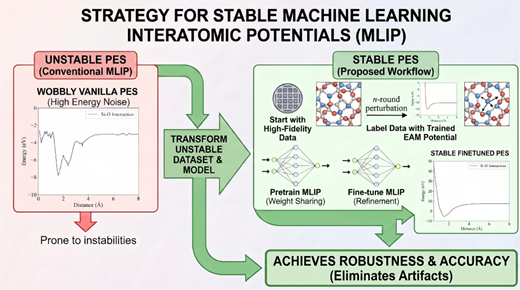
Journal of Chemical Information and Modeling (JCIM), 2026.
2026
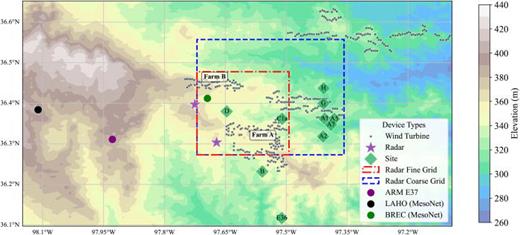
Journal of Renewable and Sustainable Energy (JRSE), 18(4), art. 043302, 2026.
Industry Research Experience
May 2026 — Aug. 2026
Lila Sciences, Inc., Cambridge, MA
Machine Learning Intern, Physical Sciences, Simulation Team
Built agentic systems for automated model development in the physical sciences.
- Shipped an agentic hyperparameter optimization framework for machine learning interatomic potentials and property-prediction models into internal research infrastructure; tuned models set internal state-of-the-art benchmarks and reached production use.
- Developed a multi-agent auto-research system that evolves MLIP architectures by reasoning over model design, proposing new architectures concurrently with in-flight optimization runs for higher experimental throughput than sequential loops.
- Validated the system by recovering strong-baseline performance from an underperforming architecture and by extending a model to a property outside its original scope.
- Shipped an agentic hyperparameter optimization framework for machine learning interatomic potentials and property-prediction models into internal research infrastructure; tuned models set internal state-of-the-art benchmarks and reached production use.
- Developed a multi-agent auto-research system that evolves MLIP architectures by reasoning over model design, proposing new architectures concurrently with in-flight optimization runs for higher experimental throughput than sequential loops.
- Validated the system by recovering strong-baseline performance from an underperforming architecture and by extending a model to a property outside its original scope.
Aug. 2025 — Dec. 2025
Fraunhofer Institute for Wind Energy Systems (IWES), Bremen, Germany
Data Engineering Research Intern, Wind Energy, Wake Simulation
Prepared multi-instrument field measurements for wake model validation in the AWAKEN project.
- Processed a year of TB-scale, multi-instrument wind measurement data (dual-Doppler radar, lidar, disdrometer, met stations) with NetCDF and Spark pipelines to curate benchmark cases.
- Invented a local contrast filter to discard cases with unphysical spikes in radar data, identified meteorological and seasonal correlates of the artifacts, and validated that flagged cases showed degraded wind speed and angle accuracy against reference instruments.
- Benchmarked two engineering wake models across the full AWAKEN domain (two wind farms, > 100 km2) under varying turbulence regimes. First-author paper in JRSE.
- Processed a year of TB-scale, multi-instrument wind measurement data (dual-Doppler radar, lidar, disdrometer, met stations) with NetCDF and Spark pipelines to curate benchmark cases.
- Invented a local contrast filter to discard cases with unphysical spikes in radar data, identified meteorological and seasonal correlates of the artifacts, and validated that flagged cases showed degraded wind speed and angle accuracy against reference instruments.
- Benchmarked two engineering wake models across the full AWAKEN domain (two wind farms, > 100 km2) under varying turbulence regimes. First-author paper in JRSE.
May 2024 — Aug. 2024
Leibniz Institute of Plant Biochemistry, Halle (Saale), Germany
Machine Learning Research Intern, Computational Chemistry
Applied machine learning and graph analysis to large protein families.
- Explored protein families as sequence similarity graphs with embedding-distance-weighted edges, evaluating graph sparsification, community detection, and centrality metrics to identify functionally important sequences in the cytochrome c and influenza families.
- Designed a cluster-based, distance-maximizing data split strategy for non-i.i.d. protein sequences, combining ESM embedding clustering with a surrogate-model-assisted evolutionary search; outperformed random splits and SpanSeq on downstream classification.
- Explored protein families as sequence similarity graphs with embedding-distance-weighted edges, evaluating graph sparsification, community detection, and centrality metrics to identify functionally important sequences in the cytochrome c and influenza families.
- Designed a cluster-based, distance-maximizing data split strategy for non-i.i.d. protein sequences, combining ESM embedding clustering with a surrogate-model-assisted evolutionary search; outperformed random splits and SpanSeq on downstream classification.
Academic Research Experience
May 2023 — Now
Georgia Institute of Technology, Atlanta, GA
Graduate Research Assistant, Fung Group, CSE
Advisor:
Researching machine learning for materials discovery and simulation in the Fung Group.
- Developed a physics-informed pretraining strategy for machine learning interatomic potentials, validated across three chemistries (silica, phosphorus, MPTrj) and three architectures (CGCNN, TorchMD, M3GNet); reduced unphysical molecular dynamics artifacts and improved recovery of AIMD trajectories over regularization baselines. First-author paper in JCIM.
- Built a differentiable geometry toolbox exposing structural properties as autograd-optimizable losses and served it to LLM agents over MCP, reaching 87.5% success on 40 natural-language structure-editing tasks; designed a propose-act-feedback multi-agent system that tripled target band gaps on 9/10 inverse-design tasks.
- Leading an agentic descriptor-mining project that applies SISSO within an agent framework to discover interpretable descriptors for superconducting critical temperature across ~8,000 conventional superconductors.
- Developed a physics-informed pretraining strategy for machine learning interatomic potentials, validated across three chemistries (silica, phosphorus, MPTrj) and three architectures (CGCNN, TorchMD, M3GNet); reduced unphysical molecular dynamics artifacts and improved recovery of AIMD trajectories over regularization baselines. First-author paper in JCIM.
- Built a differentiable geometry toolbox exposing structural properties as autograd-optimizable losses and served it to LLM agents over MCP, reaching 87.5% success on 40 natural-language structure-editing tasks; designed a propose-act-feedback multi-agent system that tripled target band gaps on 9/10 inverse-design tasks.
- Leading an agentic descriptor-mining project that applies SISSO within an agent framework to discover interpretable descriptors for superconducting critical temperature across ~8,000 conventional superconductors.
Projects
Sep. 2024 - Jan. 2025
Led a 2-person team building a multimodal tool for free-text queries over protein sequences in the UniProt database.
- Trained a CLIP-style dual encoder (ESM2 + BERT) on a 10k-pair corpus curated by pairing UniProt entries with LLM-generated layman and professional descriptions.
- Reached 94.05% top-50 accuracy on layman queries (vs. 67.33% for an NER/keyword baseline) and cut query latency from over 24 hours to under 40 seconds.
- Deployed a quantized inference service with Flask and Docker on AWS (ECS/Fargate, ECR, Route 53), live at nl2prot.org.
- Trained a CLIP-style dual encoder (ESM2 + BERT) on a 10k-pair corpus curated by pairing UniProt entries with LLM-generated layman and professional descriptions.
- Reached 94.05% top-50 accuracy on layman queries (vs. 67.33% for an NER/keyword baseline) and cut query latency from over 24 hours to under 40 seconds.
- Deployed a quantized inference service with Flask and Docker on AWS (ECS/Fargate, ECR, Route 53), live at nl2prot.org.
2024
Participated in the Workout Of the Day (WOD) prediction project group at Data Science @ GT.
- Used Python to build data cleaning and feature engineering pipelines for the downstream machine learning tasks.
- Leveraged modern optimization libraries to design an automated hyperparameter search pipeline for modeling.
- Used Python to build data cleaning and feature engineering pipelines for the downstream machine learning tasks.
- Leveraged modern optimization libraries to design an automated hyperparameter search pipeline for modeling.
Oct. 2023 - Dec. 2023
Implement a pipeline to extract source data from various forms of scientific plots.
- Utilized YOLO and fineuned OCR to extract data from various forms of scientific plots.
- Deploy with Flask backend and HTML/CSS frontend.
- Utilized YOLO and fineuned OCR to extract data from various forms of scientific plots.
- Deploy with Flask backend and HTML/CSS frontend.
Feb. 2023
A tool tailored for PR teams of companies to analyze impact of tweets on stock prices.
- Trained a word2vec model for tweet analysis.
- Utilized GPT for generation of sample tweets.
- Deploy with Flask backend and Wix on Google Cloud.
- Trained a word2vec model for tweet analysis.
- Utilized GPT for generation of sample tweets.
- Deploy with Flask backend and Wix on Google Cloud.
Teaching
Jul. 2024 — Aug. 2024
Instructor, Remote
Instructor for the 2024 iteration of a free summer bootcamp introducing ~200 science-major students to scientific computing and deep learning with Python and PyTorch. Led the lecture on deep learning and PyTorch fundamentals (autodiff, building MLPs from scratch), and assisted on the lecture covering graph neural networks for molecular applications.
Jan. 2023 — May 2024
CS 1331: Introduction to Object-Oriented Programming
Teaching Assistant, Georgia Institute of Technology, Atlanta, GA
Supported a large-enrollment (~500 students per semester) introductory course on object-oriented programming and JavaFX, working with a team of ~25 TAs across four semesters on grading, office hours, and weekly recitations. Served as Q&A forum lead for two semesters, owning homework and exam logistics announcements and coordinating TA responses.
Honors and Awards
Aug. 2026 — Now
Graduate Research Assistantship
Funded assistantship supporting full-time research as a Master's student in the Fung Group, Georgia Tech
Aug. 2024 — Dec. 2024
President's Undergraduate Research Award (PURA)
Competitive, faculty-mentored research award supporting undergraduate research at Georgia Tech
2022 — 2025
Faculty Honors
Awarded each semester for achieving a 4.0 GPA; received every semester of Bachelor studies
Certificates
April 2024
Microsoft Office Specialist: Excel Expert
Microsoft, MO-201
Expertise in Manage workbook options and settings, Manage and format data, Create advanced formulas and macros, and Manage advanced charts and tables in Excel.
April 2024
Microsoft Office Specialist: Excel Associate
Microsoft, MO-200
Expertise in Manage worksheets and workbooks, Manage data cells and ranges, Manage tables and table data, Perform operations by using formulas and functions, and Manage charts in Excel.
March 2024
AWS Certified Machine Learning - Specialty
Amazon Web Services, MLS-C01
Advanced certification validating the ability to design, build, and deploy ML solutions on AWS.
February 2024
AWS Certified Cloud Practitioner
Amazon Web Services, CLF-C02
Foundational certification validating knowledge of AWS Cloud concepts, services, security, and pricing
Technical Skills
Languages: Python, Java, SQL, Bash
ML & AI: PyTorch, scikit-learn, LLM agents and multi-agent systems, MCP, graph neural networks, NLP, contrastive learning, hyperparameter optimization
Data & Compute: Apache Spark (PySpark), Pandas, NumPy, NetCDF, MongoDB, Tableau, PowerBI, Matplotlib, Seaborn, high-performance computing (SLURM)
Cloud & Tools: AWS (ECS, Fargate, Lambda, ECR, S3, Route 53), Docker, Flask, Git, Linux